
NAEYC Standard 1: Promoting Child Development and Learning
Students prepared in early childhood degree programs are grounded in a child development knowledge base. They use their understanding of young children's characteristics and needs and of the multiple interacting influences on children's development and learning to create environments that are healthy, respectful, supportive, and challenging for each child.
1a: Knowing and understanding young children's characteristics and needs
1b: Knowing and understanding the multiple influences on development and learning
1c: Using developmental knowledge to create healthy, respectful, supportive, and
challenging learning environment
Artifact
This artifact includes a research paper I completed on Lev Vygotsky and his Sociocultural Theory of development. In this paper, I explored how children learn through social interaction, guidance from adults and peers, and meaningful engagement with their environment.

Rationale Statement
This artifact demonstrates my understanding of how child development theories influence early childhood education practices. Lev Vygotsky’s Sociocultural Theory emphasizes that children learn through interactions with others and through experiences within their social and cultural environments. His concept of the Zone of Proximal Development explains how children are able to achieve higher levels of learning when supported by knowledgeable adults or peers. Understanding this theory helps educators create supportive learning environments that encourage exploration, communication, and collaboration. By applying these ideas in practice, educators can guide children’s learning through play, interaction, and meaningful experiences that support cognitive, social, and emotional development. This artifact reflects my understanding of how child development theory informs effective teaching practices and supports young children’s growth and learning.
NAEYC Standard 2: Building Family and Community Relationships
Students prepared in early childhood degree programs understand that successful early childhood education depends upon partnerships with children's families and communities. They know about, understand, and value the importance and complex characteristics of children's families and communities. They use this understanding to create respectful, reciprocal relationships that support and empower families and to involve all families in their children's development and learning.
2a: Knowing about and understanding diverse family and community characteristics
2b: Supporting and engaging families and communities through respectful, reciprocal
relationships
2c: Involving families and communities in their children's development and learning
Artifact
*Permission has been obtained from parents/guardians for the use of all photos and videos displayed in this portfolio*
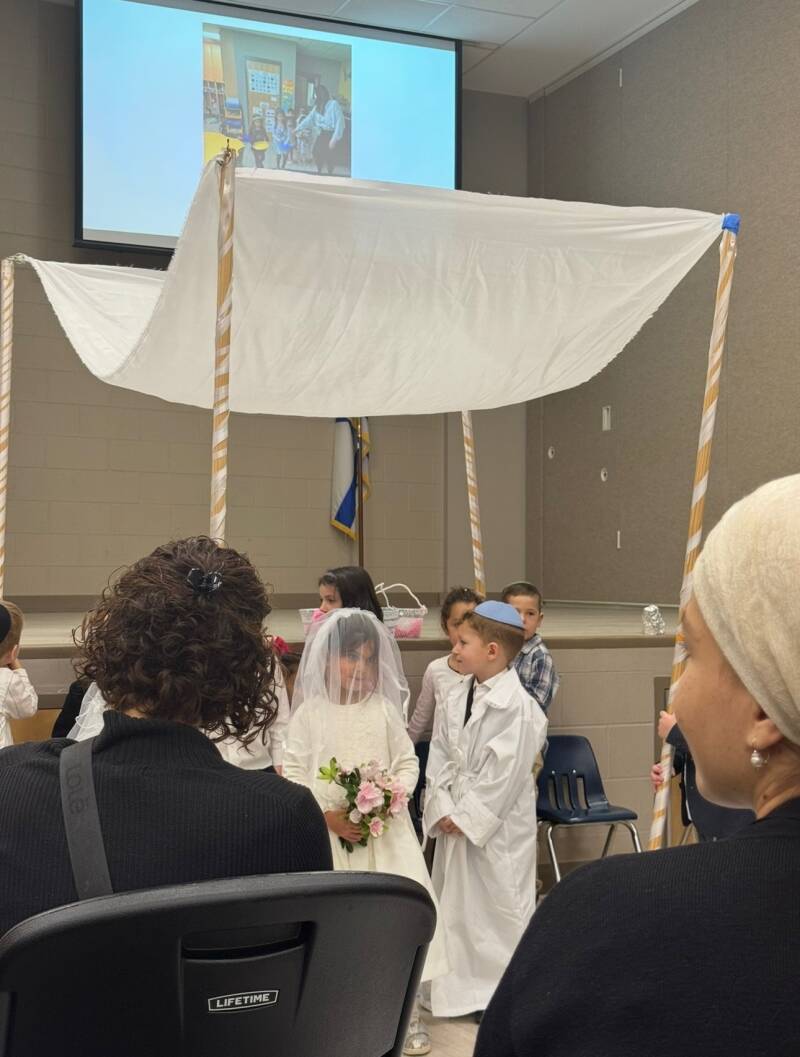
This artifact includes photographs and video from a Jewish family celebration that I attended for one of the children I care for as a nanny. The family invited me to attend the event because of the strong relationship I have built with all three children and their family. My presence at the event allowed me to support the child and participate in an important cultural and family celebration.

Rationale Statement
This artifact represents my understanding of the importance of building strong relationships with families and respecting the cultural traditions that are meaningful to them. Attending this celebration demonstrates the trusting and supportive relationship that I have developed with the child and her family. Building meaningful connections with families helps educators better understand the child’s background, culture, and values.
Participating in family and community events also strengthens communication and collaboration between caregivers and families. By showing support for the child and her family during an important cultural event, I demonstrated respect for their traditions and reinforced the partnership between home and childcare. Developing these respectful relationships with families helps create a supportive environment where children feel valued, understood, and connected both at home and in their learning environments.
*Permission has been obtained from parents/guardians for the use of all photos and videos displayed in this portfolio*
Watch my video
*Permission has been obtained from parents/guardians for the use of all photos and videos displayed in this portfolio*
NAEYC Standard 3: Observing, Documenting, and Assessing
Students prepared in early childhood degree programs understand that child observation, documentation, and other forms of assessment are central to the practice of all early childhood professionals. They know about and understand the goals, benefits, and uses of assessment. They know about and use systematic observations, documentation, and other effective assessment strategies in a responsible way, in partnership with families and other professionals, to positively influence the development of every child.
3a: Understanding the goals, benefits, and uses of assessment
3b: Knowing about assessment partnerships with families and with professional colleagues
3c: Knowing about and using observation, documentation, and other appropriate
assessment tools and approaches
3d: Understanding and practicing responsible assessment to promote positive
outcomes for each child
Artifact
This artifact includes developmental screenings I completed using the Ages & Stages Questionnaire (ASQ-3), along with a five-page ASQ reflection paper for my Infant & Toddler Curriculum course (ECE 1500). One screening was conducted for a 12-month-old infant named Benno, and an additional screening is being completed for a preschool-aged child. These assessments evaluate children’s development across several domains, including communication, gross motor, fine motor, problem solving, and personal-social skills. For the ASQ paper, I observed and interacted with Benno in his home environment, which allowed me to gather meaningful information about his development. His results showed that he is on track for his age, with strengths in communication and fine motor skills, as well as emerging abilities in problem solving and personal-social development. This assignment also allowed me to reflect on ways to support his continued growth through simple, developmentally appropriate activities and interactions. Overall, this artifact demonstrates my ability to use assessment tools to observe, understand, and support children’s development in a thoughtful and meaningful way.


Rationale Statement
This artifact demonstrates my understanding of how observation, documentation, and assessment support children’s development and learning. The Ages & Stages Questionnaire is a developmental screening tool that helps educators and caregivers gather information about a child’s progress in important developmental areas. Through this screening process, I was able to observe and document Benno’s development across the five core domains measured by the ASQ-3: communication, gross motor, fine motor, problem solving, and personal-social skills. The results of the screening indicated that Benno’s development was on track for his age, with particularly strong skills in communication and fine motor development. Completing this assessment allowed me to practice observing children carefully, documenting developmental milestones, and interpreting assessment results in a meaningful way. In addition, I completed a detailed written reflection that allowed me to further analyze the results and identify developmentally appropriate strategies to support continued growth. This artifact connects to NAEYC Standard 3 because it demonstrates how educators use formal assessment tools to better understand children’s development and to make informed decisions about supporting their learning. It also highlights the importance of using developmentally appropriate screening tools and sharing information with families and professionals when needed to ensure that children receive the support necessary for positive developmental outcomes.
NAEYC Standard 4: Developmentally Effective Approaches
Students prepared in early childhood degree programs understand that teaching and learning with young children is a complex enterprise, and its details vary depending on children's ages, characteristics, and the settings within which teaching and learning occur. They understand and use positive relationships and supportive interactions as the foundation for their work with young children and families. Students know, understand, and use a wide array of developmentally appropriate approaches, instructional strategies, and tools to connect with children and families and positively Influence each child's development and learning.
4a: Understanding positive relationships and supportive interactions as the foundation
of their work with children
4b: Knowing and understanding effective strategies and tools for early education
4c: Using a broad repertoire of developmentally appropriate teaching/learning
approaches
4d: Reflecting on their own practice to promote positive outcomes for each child
*Permission has been obtained from parents/guardians for the use of all photographs displayed in this portfolio*
Artifact
This artifact includes a screenshot of communication from the children’s parent confirming a visit to the Fascination Factory, as well as a photograph of the children participating in an arts and crafts activity during the visit. During this experience, the children were able to explore a creative, play-based environment designed to encourage curiosity, imagination, and hands-on learning. The activity allowed the children to interact with materials, express their creativity, and engage in collaborative play with others.


Rationale Statement
This artifact demonstrates the importance of using developmentally appropriate and play-based learning experiences to support children’s growth and development. The environment at the Fascination Factory encourages children to explore, experiment, and learn through hands-on activities that support creativity, problem-solving, and social interaction. Participating in this experience allowed the children to engage in meaningful learning through play while developing important skills such as communication, cooperation, and creative expression. Observing and supporting the children during this activity reinforced my understanding that young children learn best when they are actively engaged in experiences that allow them to explore their interests and interact with their environment. This artifact connects to NAEYC Standard 4: Using Developmentally Effective Approaches, as it demonstrates how educators can support children’s learning by providing opportunities for exploration, creativity, and hands-on experiences. Experiences like this highlight the importance of creating environments where children feel encouraged to discover, experiment, and develop new skills through play.

*Permission has been obtained from parents/guardians for the use of all photographs displayed in this portfolio*
NAEYC Standard 5: Using Content Knowledge to Build Meaningful Curriculum
Students prepared in early childhood degree programs use their knowledge of academic disciplines to design, implement, and evaluate experiences that promote positive development and learning for each and every young child. Students understand the importance of developmental domains and academic (or content) disciplines in an early childhood curriculum. They know the essential concepts, inquiry tools, and structure of content areas, including academic subjects, and can identify resources to deepen their understanding. Students use their own knowledge and other resources to design, implement, and evaluate meaningful, challenging curricula that promote comprehensive
developmental and learning outcomes for every young child.
5a: Understanding content knowledge and resources in academic disciplines
5b: Knowing and using the central concepts, inquiry tools, and structures of content
areas or academic disciplines
5c: Using their own knowledge, appropriate early learning standards, and other resources
to design, implement, and evaluate meaningful, challenging curricula for each child
Artifact
*Permission has been obtained from parents/guardians for the use of all photographs displayed in this portfolio*
This artifact is a hands-on learning experience I implemented with children in my nanny care that focused on exploring color mixing through both painting and sensory play. The activity included two components: traditional color mixing with paint and a “magic color hands” activity, where children used their hands to blend primary colors together. Children were provided with a variety of colors, including red, blue, and yellow, and encouraged to freely explore what would happen when they mixed them together. During the “magic color hands” portion, children physically combined colors using their hands, creating a sensory-rich experience that supported active learning. As they mixed colors, they observed changes and discovered new colors such as magenta and turquoise. Throughout the activity, I engaged children in meaningful conversations by asking open-ended questions such as, “What do you think will happen if we mix these colors?” and “How did you make that color?” This allowed children to make predictions, test their ideas, and describe their discoveries. This activity supported multiple developmental domains, including cognitive development (problem-solving and prediction), language development (describing observations), and creative expression (artistic exploration).


Rationale Statement
This artifact reflects my ability to design and implement meaningful, content-rich learning experiences that support children’s development across multiple domains. Through this activity, I intentionally integrated concepts from science, mathematics, and the creative arts to promote hands-on, active learning. Children explored foundational science concepts such as cause and effect and basic color theory by experimenting with primary colors to create new ones. The hands-on nature of the activity allowed children to actively engage in the learning process, make predictions, and observe outcomes. In addition, early mathematical thinking was supported as children compared colors, recognized patterns, and explored variations in shade and intensity. I supported children’s learning by asking open-ended questions and encouraging them to describe their thinking and discoveries. This approach promoted language development, critical thinking, and problem-solving skills. Children were given the opportunity to express themselves creatively while also building an understanding of how colors interact. The “magic color hands” portion of the activity added a sensory component that made the experience more engaging and developmentally appropriate. By incorporating tactile exploration, I was able to support different learning styles and encourage curiosity and independence. Overall, this activity demonstrates my ability to create intentional learning experiences that are engaging, developmentally appropriate, and rooted in meaningful content knowledge, while supporting children’s exploration, creativity, and understanding of the world around them.
*Permission has been obtained from parents/guardians for the use of all photographs displayed in this portfolio*
NAEYC Standard 6 – Becoming a Professional
Students prepared in early childhood degree programs identify and conduct themselves as members of the early childhood profession. They know and use ethical guidelines and other professional standards related to early childhood practice. They are continuous, collaborative learners who demonstrate knowledgeable, reflective, and critical perspectives on their work, making informed decisions that integrate knowledge from a variety of sources. They are informed advocates for sound educational practices and policies.
6a: Identifying and involving oneself with the early childhood field
6b: Knowing about and upholding ethical standards and other professional guidelines
6c: Engaging in continuous, collaborative learning to inform practice
6d: Integrating knowledgeable, reflective, and critical perspectives on early education
6e: Engaging in informed advocacy for children and the profession
Artifact
This artifact represents my advocacy work completed in my ECE 1515: Family & Community Connections course. For this assignment, I focused on the issue of staff turnover and retention challenges in early childhood education (ECE). Through this project, I explored how factors such as low wages, limited professional development opportunities, and challenging working conditions contribute to high turnover rates among early childhood educators. I also examined how these challenges impact children and families, particularly in relation to consistency of care, relationship-building, and overall program quality. As part of my advocacy work, I identified potential solutions to support improvement in the field, including increasing wages, strengthening professional development opportunities, and creating more supportive and respectful work environments for educators. This assignment allowed me to connect course concepts related to family and community relationships with broader issues affecting the ECE field.

Rationale Statement
This artifact reflects my development as an early childhood professional through my engagement with real-world issues impacting the field. Through my work in ECE 1515, I developed a deeper understanding of how challenges such as staff turnover affect not only educators, but also children and families. By examining this issue, I was able to think critically about the importance of stable, supportive environments for both educators and the children in their care. This experience helped me recognize the role that early childhood professionals play not only in the classroom, but also in advocating for improvements within the field. This artifact demonstrates my commitment to professionalism through awareness, reflection, and a willingness to engage in meaningful conversations about change. As a future educator, I am committed to supporting positive outcomes for children, families, and fellow educators by continuing to grow, learn, and advocate for quality in early childhood education.